
Wishbound – Review – A Masterclass in Atmospheric Horror and Digital Debt
When an independent title arrives for evaluation, there is often an unspoken industry anxiety that scrutinizing it too harshly might jeopardize future review opportunities. Fortunately, evaluating Wishbound, a newly released psychological horror experience for the PlayStation 5, requires absolutely no diplomatic sugarcoating. Developed and published by AMERICODE, LLC as a solo passion project crafted over the course of a year, this title eschews traditional survival horror tropes in favor of something far more insidious. It finds absolute terror in the mundane, everyday glow of a smartphone screen, delivering an experience that is both narratively profound and mechanically inventive.
At a highly accessible price point of $9.99, Wishbound is an exploration of desire, desperation, and the inevitable cost of taking the easy way out. It weaponizes modern communication habits, turning the simple act of waiting for a text message into a vehicle for psychological dread.
The Genesis of a Digital Nightmare
The narrative premise of Wishbound is devastatingly simple, yet immediately engaging. The story begins precisely at 3:00 AM when a mysterious application called “tally” quietly and automatically installs itself onto the protagonist’s device. The app offers a tantalizing proposition: the granting of miracles. These begin as small, intensely relatable desires that almost anyone has harbored at some point—making a crush finally text back, forcing a bitter rival to drop an escalating argument, or simply ensuring a chaotic day goes smoothly.
However, the game establishes its central, unbreakable rule from the very beginning: every wish is granted, but every wish is owed. The “tally” app operates as a supernatural ledger, keeping a meticulous balance that always comes due, collecting its debts in pieces of the protagonist’s life and sanity. Over the course of five in-game nights, the player must navigate the intertwining stories of three people in need—a crush, a rival, and a friend—while managing the escalating physical and psychological toll of relying on the app’s dark miracles.
The writing throughout these five nights is exceptionally sharp. The narrative unfolds entirely via text messages, complete with typing indicators, read receipts, and delayed replies that feel painfully authentic to the rhythms of modern digital communication. The game trusts the audience to notice the subtle shifts in tone as relationships evolve or decay based on conversational choices, creating a deeply immersive environment where a single text bubble can induce genuine anxiety.




The Phone as the World
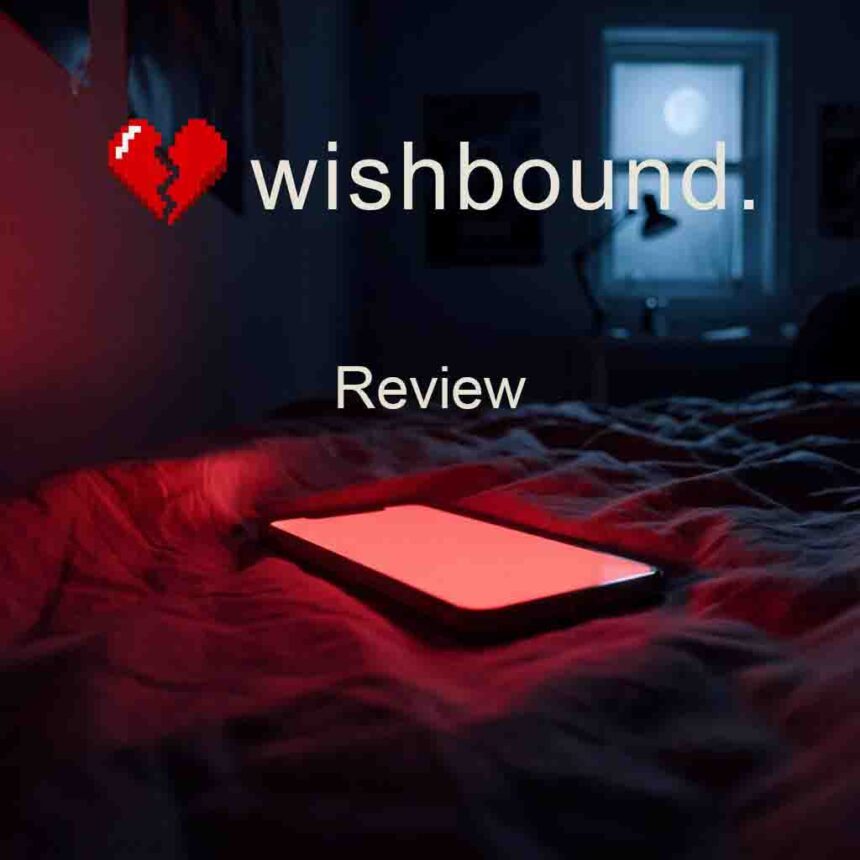
One of the most striking achievements of Wishbound is its uncompromising commitment to its presentation. The entire game is experienced through the phone’s user interface, effectively trapping the narrative inside the glass. The player reads message threads and selects every reply, with each choice featuring a clearly listed price that must be carefully considered before tapping to confirm.
Yet, the horror extends well beyond the simulated digital interface. As the protagonist’s debt climbs, the physical room surrounding the phone begins to react. The background lighting subtly shifts, shadows linger unnaturally, and the edges of the room appear to bleed and decay into the screen.
Experiencing this on flagship, high-end console hardware elevates the immersion immensely. While relying entirely on a controller rather than native touch inputs, the interface feels incredibly intuitive. The raw processing power driving the console experience ensures that the environmental changes are rendered with buttery smoothness. The background effects, dynamic lighting, and interface transitions never hitch or stutter, creating a seamless illusion that locks the audience completely into the claustrophobic atmosphere. The subtle haptics of the controller serve as a physical tether to the cursed device on screen, further blurring the line between the player and the protagonist.
Behind the scenes, the game tracks invisible meters for affection, suspicion, sanity, and debt. These metrics quietly reroute the narrative without overtly announcing themselves, ensuring that the world reacts organically to the player’s mounting reliance on the app.
The Dreamscapes and the Monkey’s Paw
The core mechanical loop of Wishbound revolves around the act of making a wish, which actively transports the player from the text-based interface into surreal, interactive sequences. Every request opens a vivid dream, manifesting as a self-contained minigame where the player must fight for a “clean” outcome. There are 22 mechanically unique dream minigames in total, meaning no two wishes play exactly alike, ranging from intense rhythm-based challenges requiring perfect tempo to abstract, shifting puzzles.
This is where the game introduces its most brilliant and subversive design choice: the complete removal of the traditional “Game Over” screen. If a dream minigame is won with a clean success, the wish lands softly and the consequences are entirely manageable. If the minigame is lost, however, the narrative does not stop to let the player retry. Instead, a “monkey’s paw” effect triggers. The wish is still fulfilled, but it goes horribly, unsettlingly wrong.
This “fail forward” mechanic ensures that narrative pacing never stalls due to mechanical frustration. Poor performance simply pushes the story down a much darker, more twisted path. This creates a palpable sense of tension; failure is terrifying not because it forces a checkpoint restart, but because the player is forced to live with the grim consequences of their botched desires. It actively subverts traditional gaming power fantasies—instead of mastering a system to win, the player is trapped in a downward spiral where even a flawless success feels tainted because it ultimately increases the overarching debt to the app.
A Web of Consequences
Despite being an intense, focused narrative experience, AMERICODE, LLC has built a staggering amount of replayability into the game’s framework. A single run takes approximately two hours to complete, making it highly respectful of the audience’s time and perfect for a single evening’s playthrough. However, the true depth of Wishbound reveals itself upon subsequent runs.
With 18 distinct endings—ranging from walking away with zero debt to being completely collected by the app—mapping out the entire narrative web becomes highly addictive. The invisible meters ensure that no two playthroughs tally the exact same way, and the application ominously remembers what is owed across different sessions.
Trophy hunters and completionists will find a very satisfying and achievable Platinum trophy. Earning it requires not only mastering the dream sequences—such as clearing a full day without dropping a single plate in a rhythm dream for the “perfect tempo” trophy, or earning the “untouchable” accolade for a completely clean run—but also deliberately failing. Several of the 18 endings and specific achievements, such as the “static” trophy, can only be unlocked by intentionally botching enough wishes that the story’s reality stops making sense. Exploring the individual character routes to unlock “her story,” “his story,” and “their story” provides profound emotional context to the overarching horror.
Final Verdict
Wishbound is a definitive masterclass in tension, atmospheric storytelling, and narrative restraint. It proves definitively that effective psychological horror does not require grotesque monsters, excessive gore, or cheap jump scares. Sometimes, the truest terror is found in the realization that a terrible, life-altering choice was made purely out of convenience, and that the bill for that convenience is finally due.
The authentic smartphone interface, the inventive “fail forward” minigames, and the reactive, decaying environment coalesce into an experience that feels wholly original in today’s gaming landscape. For a solo developer to conceptualize and execute a project with this level of mechanical polish and narrative depth is a monumental achievement. It is a game that deeply respects player agency, rewards careful thought over impulsive action, and leaves a lingering sense of unease long after the console is powered down. It easily justifies its modest asking price and secures its place as one of the most memorable indie horror titles of the year.