
A Tale of Altered Fates and Apocalyptic Survival
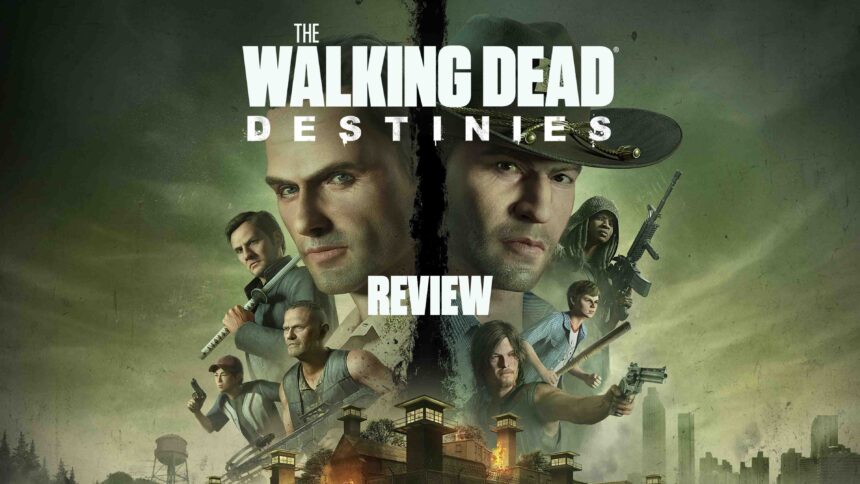
For over a decade, AMC’s television adaptation of The Walking Dead has captivated audiences, sparking endless debates among its passionate fanbase. What if certain characters had survived their fateful encounters? What if the leadership dynamics of the core survivor group had shifted entirely? The Walking Dead: Destinies, developed by Flux Games and published by GameMill Entertainment, attempts to answer these lingering fan theories. By offering an interactive journey through the first four seasons of the iconic television show, the title promises players the unprecedented ability to alter the established canon.
Experiencing the game on the PlayStation 5 Pro, this reviewer focused primarily on the narrative execution, the weight of the choice mechanics, and the overarching gameplay loops that define this post-apocalyptic adventure, rather than the raw technical capabilities of the hardware. What emerges is a fascinating, albeit uneven, experiment in licensed video game development. It is a title that swings for the fences with its narrative premise, offering a valiant effort to adapt a beloved universe, even as it occasionally struggles under the weight of its own mechanical execution. For a reviewer looking to assess the game fairly, it is crucial to recognize the immense ambition behind the project while remaining realistic about its final delivery.
Rewriting the Apocalypse
The core appeal of The Walking Dead: Destinies lies in its highly publicized “Shatter Fate” mechanic. The narrative begins faithfully, placing the player in the hospital gown of Rick Grimes as he awakens to a world overrun by the undead. From the desolate, walker-infested streets of Atlanta to the rural isolation of the Greene family farm, the claustrophobic cell blocks of the West Georgia Correctional Facility, and finally, the heavily fortified town of Woodbury, the game covers an impressive amount of ground. The campaign is divided into five distinct acts, comprising 23 episodes that chronicle the most defining moments of the early seasons.
However, the defining hook is the ability to weave an original path through these familiar events. At critical, choice-driven junctures, the game presents binary decisions that drastically alter the survival roster. The most prominent of these is the fateful confrontation between Rick Grimes and Shane Walsh at the climax of the farm arc. In this alternate reality, the narrative allows Shane to emerge victorious, effectively killing off the franchise’s main protagonist and placing the volatile, shotgun-wielding Shane in charge of the group moving forward.
This level of narrative deviation extends to several other key characters. It is entirely possible to see Carl Grimes succumb to early injuries, completely changing the emotional dynamic of the surviving family members. Similarly, the tense rooftop sequence in Atlanta can be altered, resulting in the abrasive Merle Dixon remaining with the group while T-Dog is left to perish. Later, players can even manipulate the political hierarchy of Woodbury so that The Governor is usurped by unlikely replacements.



When these choices land, they offer a thrilling sense of novelty. Seeing characters who perished early in the television series survive to participate in the final prison assault is undeniably satisfying for longtime fans. Yet, this ambition is somewhat double-edged. Because the overarching plot must still move forward to hit the major geographical set pieces of the television show, the consequences of these choices can sometimes feel a bit superficial. Often, a surviving alternate character simply swaps into the role of the deceased, delivering similar plot beats. In extreme cases, the narrative text resorts to vague descriptors like “The Leader of Woodbury” to accommodate whichever character the player installed in the role, rather than offering a bespoke storyline tailored to that specific personality. Furthermore, the story is frequently delivered through static, stylized slideshow cutscenes, which serve their purpose but lack the cinematic weight that fans of the television series might expect from such dramatic moments.
The Grind of Survival: Combat and Stealth
Transitioning from the overarching narrative to the moment-to-moment action, The Walking Dead: Destinies operates as a third-person action-adventure heavily reliant on resource management and a strict stamina system. Players take control of a diverse roster of up to 13 playable characters, each bringing their signature weapons and combat styles into the fray. Rick wields his trusty revolver and a baseball bat, Daryl utilizes his silent crossbow and a hunting knife, Shane favors a shotgun and a sledgehammer, and Michonne expertly maneuvers her iconic katana.
Combat is divided between stealth approaches and all-out action. The stealth mechanics encourage crouching through environments and utilizing tall grass to bypass or silently dispatch Walkers. The game provides a form of instinct vision that highlights enemy patrol paths, aiding players in lining up backstab executions. When stealth fails—or when the game forces an open confrontation—the combat loop transitions into a frantic exercise in resource management.
Every physical action in combat, from light and heavy melee swings to dodging, consumes stamina. Initially, the stamina drain can feel quite punishing; dispatching a single Walker can deplete the meter, leaving the character sluggish and vulnerable while waiting for the bar to slowly recharge. If a Walker manages to grapple the player, a quick-time event (QTE) initiates. Failing this QTE does not immediately result in a game over but instead triggers a “Broken” state. In this state, the character suffers a debuff, visually represented by a scar, and must survive for a set duration or perform specific executions to regain a small portion of their health.
While these stamina and grapple mechanics are clearly designed to simulate the exhausting, desperate nature of surviving a zombie horde, they can occasionally hinder the flow of combat, causing encounters to devolve into brief bursts of action followed by periods of retreating. However, it is worth noting that subsequent updates from the developer, such as patch 1.02, have actively addressed these balance issues. Post-launch adjustments have rebalanced the adrenaline meter, reduced the duration of the Broken status, buffed heavy melee damage, and adjusted the inputs required to escape enemy grabs, resulting in a much smoother and fairer combat experience than what was present at launch.
To keep the encounters engaging, the game introduces variant enemy types. Beyond the standard undead, players will encounter “Alarm Walkers” that shriek to attract distant threats, and “Heavy Walkers” that require substantial melee punishment to bring down, adding a layer of threat prioritization to the larger horde fights. Gunplay offers a necessary reprieve from the grueling melee system, but ammunition is strictly limited. Scavenging the environment for a handful of bullets becomes an absolute necessity, emphasizing the survival-horror elements of the franchise and ensuring players cannot simply shoot their way through every problem.
Camp Management and Character Progression
Between the bloody expeditions, players return to the survivor camp, which serves as a hub for upgrading the roster and preparing for the next mission. Here, the game introduces a light camp management system. Tensions inevitably run high among the apocalypse survivors, and the player is periodically tasked with resolving interpersonal conflicts. For example, two characters might disagree on whether to invite strangers into the camp or pursue a risky supply run. The player must choose a side, and making the correct, logical choice rewards the player with valuable Skill Points.
While this conflict resolution mechanic lacks deep narrative consequences—often resulting in a brief line of dialogue from the spurned party—the Skill Points themselves are highly sought after. The progression system is surprisingly robust, featuring character-specific skill trees that directly impact combat efficacy and survival odds.
Investing in these skill trees is crucial for late-game survival, as the enemies become more numerous and resilient. Upgrading Rick’s skill tree, for instance, can increase his revolver clip size and unlock devastating tactical attacks for his baseball bat. Leveling up Daryl reduces the stamina cost of his dodges and stomps while increasing his overall health, making him a much more viable frontline fighter. Investing in Merle expands the blast radius of his grenades, while upgrading T-Dog allows him to recover substantial health upon performing executions.
There is a distinct strategic layer to this progression system. Because the game features permanent death based on player choices, investing all available Skill Points into a single character can be a fatal mistake if that character meets their demise in the next episode. If a character dies, their unique skill tree is locked away permanently. Therefore, players are encouraged to spread their upgrades across the roster to ensure they have a capable team regardless of the branching timeline, adding weight to how resources are allocated in the camp.
Pacing, Presentation, and The Apocalyptic Reality
From a pacing perspective, The Walking Dead: Destinies respects the player’s time. A standard playthrough clocks in at roughly six to seven hours, with completionist runs stretching closer to ten or twelve hours for those looking to experience every branching path and collect every upgrade. This relatively brisk campaign length ensures that the narrative moves quickly from one iconic location to the next, preventing the gameplay loop from overstaying its welcome.
From a design standpoint, the game succeeds in recreating the geography of the show’s most famous locations. Navigating the overrun hospital corridors, securing the perimeter of the prison, and fighting through the fortified gates of Woodbury evoke a strong sense of nostalgia. However, it is evident that the title operates on a visible budget. The environmental design can occasionally feel sterile, and the character models, while bearing resemblances to their television counterparts, lack modern graphical polish, feeling somewhat reminiscent of older hardware generations. The omission of certain key story arcs—such as the CDC explosion and several prominent side characters like Andrea—further reveals the constraints under which the developers were operating to get this ambitious project to the finish line.
Despite these limitations, the audio design manages to carry a significant portion of the atmosphere. While the original television cast largely does not return, several voice actors deliver admirable performances, attempting to match the cadence and intensity of the beloved characters. The ambient sounds of groaning Walkers, the sharp crack of a revolver echoing through an empty prison cell block, and the visceral sound effects of melee combat help ground the experience in the grim reality of the franchise.
Final Verdict
The Walking Dead: Destinies is a game of fascinating ambition that caters directly to the long-standing “what if” discussions of the franchise’s dedicated fanbase. The ability to play out alternative scenarios—saving villains, sacrificing heroes, and observing the ripple effects across the timeline—is a brilliant concept that honors the unpredictable, ruthless nature of the source material. The character-specific skill trees and the intense focus on stamina and limited resources successfully capture the desperate, exhausting struggle for survival in a walker-infested world.
The execution, however, is a reminder of the realities of game development. The narrative branches, while bold in theory, are occasionally undermined by generic textual resolutions and static presentation methods. The combat, while heavily improved by post-launch patches, still retains moments of clunkiness that require patience to master.
Ultimately, this is a title strictly for the die-hard enthusiasts of AMC’s The Walking Dead. Players looking for a flawless, high-budget action-adventure experience may find the mechanical limitations and budget constraints difficult to overlook. However, for those who have spent the last decade debating whether Shane could have been a better leader than Rick, or whether Woodbury could have been salvaged, the game offers a uniquely interactive playground to finally test those theories. It is a flawed, rough-around-the-edges experience, but it is one that possesses an undeniable, gritty charm and a deep reverence for its source material.